


KORDEKO flexible tile for balconies, loggias and terraces: an easy alternative to porcelain tiles
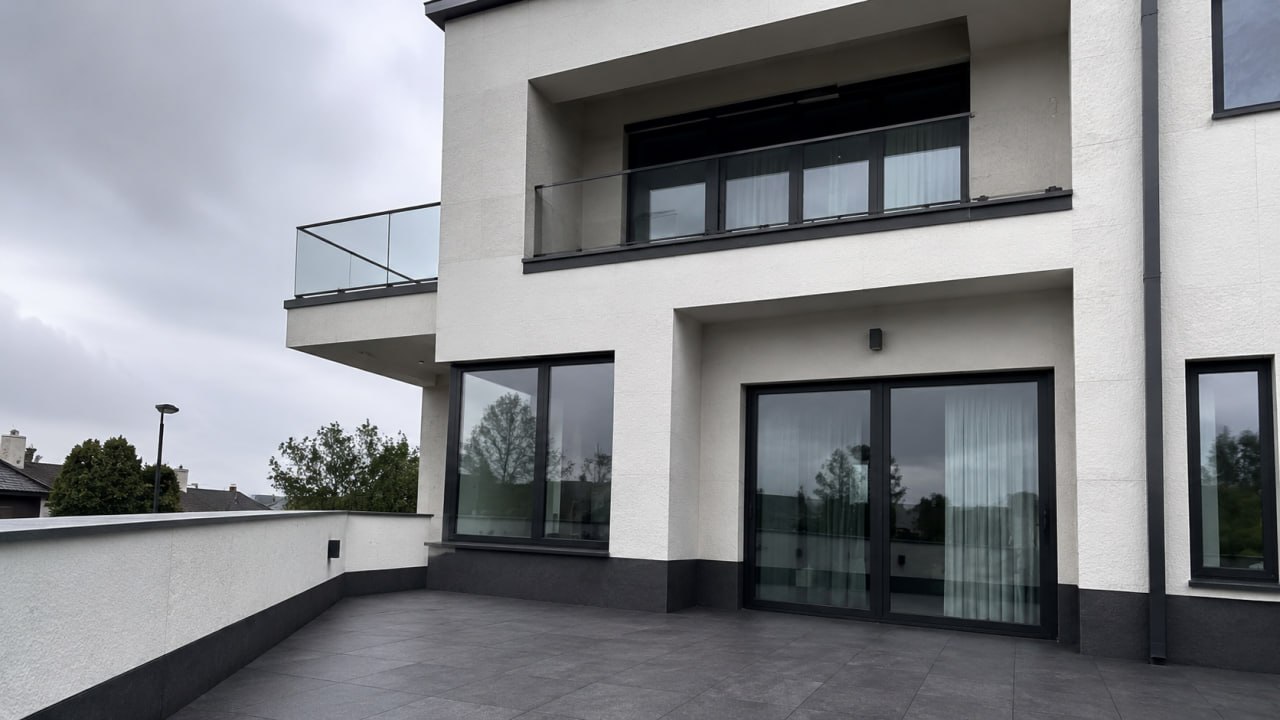
Balconies, loggias and terraces are areas where finishes are exposed to difficult conditions. Here come variations in temperature, humidity, snow, rain, sun, seepage, weight of furniture and constant traffic. Therefore, the material must be not only attractive, but also practical: light, durable and easy to install.
Porcelain tiles are often chosen out of habit, but it is not always the most convenient solution for such spaces. It is heavy, requires a solid support, precise preparation, quality waterproofing and professional installation. If the support is weak or there is thermal insulation, the additional weight and stiffness of the material can become a problem.
That is precisely why the KORDEKO flexible board (PletaFlex) is being analyzed more and more often for balconies, loggias and terraces, as a light finish for facades with a stone look.
Why material weight matters
The balcony or loggia is not just an ordinary wall. In these areas it is important to take into account the load exerted on the structure. The heavier the finish, the greater the requirements for support, adhesive, waterproofing and mounting.
Porcelain stoneware is already quite a heavy material. To this is added the adhesive, the joint filler and sometimes the leveling layers. Finally, the load on the surface becomes considerable.
The flexible board is lighter, which is why it can be used more conveniently in areas where you don't want to overload the structure: on the side walls of the balcony, parapets, areas under windows, lintels, columns, niches and loggia walls.
Where flexible stone is particularly useful
Flexible stone can not only be used on the facade of the house. It is suitable for various outdoor and semi-open areas:
- balcony cladding;
- finishing the loggia;
- terrace walls;
- parapets;
- side walls;
- columns;
- jambs and contours;
- areas around doors and windows;
- plinth areas near the terrace.
Thus, the finish can be done in the same style as the facade of the house, without creating the impression that the balcony or terrace was added separately.
Why rigid cladding can crack
On balconies and terraces, the support is often subjected to greater stresses than a regular wall. Thermal expansion, moisture, freezing, structural movements occur, especially if the area is open.
Rigid materials have a harder time withstanding these fine movements. If the media is not properly prepared, the following may occur:
- cracks in the joints;
- detachments;
- chipping at corners;
- voids under cladding;
- damage after the cold season.
Flexible board reacts better to such demands, does not create the feeling of a fragile finish and helps to maintain a uniform appearance in difficult areas.
Leaks: the main problem of balconies and terraces
Before any finishing, the water problem must be solved. If the balcony or terrace has leaks, the decorative material will not eliminate the cause. First you need to check:
- slopes;
- waterproofing;
- the connections to the walls;
- eaves and drip profiles;
- areas near the door;
- water evacuation.
If water stagnates on the surface or drains into the wall, wet spots, efflorescence, drip marks and damage to weak areas can occur over time.
The finish should be installed only after it is clear where the water is discharged and how the connections are protected.
Installation over thermal insulation: what to consider
If the balcony, loggia or terrace is connected to a thermally insulated facade, the finishing should not be carried out separately from the entire system. It is important that the Insulation of the facades is correlated with the correct technical solutions: reinforcement, netting, cornering, flashings and moisture protection.
Particular attention should be paid to:
- the passage between the wall and the floor;
- the lower area of the parapet;
- corners;
- areas near doors;
- the surfaces under the jambs;
- joints with the facade.
It is at these points that cracks, damp areas and separations most often occur, if the assembly is not carried out as part of a complete system.
Why flexible board is practical on vertical surfaces
Balconies and terraces have many small details: corners, sides, narrow portions of the wall, lintels and parapets. In such areas, heavy and rigid materials are not always easy to use.
The flexible board allows careful finishing of:
- narrow areas;
- complicated connections;
- outer corners;
- small walls;
- decorative inserts;
- the transitions between the facade and the terrace.
At the same time, the surface retains its stone appearance, without excessive weight and without a massive appearance.
How to choose the right color and texture
Natural and practical shades are recommended for balconies, loggias and terraces:
- gray;
- graphite;
- gray-beige;
- sand;
- warm shades of stone;
- brown-grey.
Very light colors highlight dust, rain marks and dirt more quickly. Very dark shades can make light dust and water marks more visible. The most practical choice is the medium tones of stone, with texture.
Mini checklist before finishing the balcony or terrace
Before installation, the following must be checked:
- If there is a correct slope for water discharge.
- If the support shows infiltrations.
- If the waterproofing is done.
- If the wall connections are protected.
- If there are drip profiles and flashings.
- If the support is suitable for the chosen material.
- If the finish does not overload the structure.
- If the finish is integrated into the overall appearance of the facade of the house.
If these aspects are thought out ahead of time, the finish will have a neat appearance and will last longer.
Conclusion
The flexible plate for balconies, loggias and terraces is an easy and practical alternative to porcelain tiles, especially for vertical surfaces, parapets, window sills and walls. This allows for a stone look without added weight, blends well with the facade and is practical for intricate detailing.
It is important not to forget that arranging the balcony or terrace does not start with the finish, but with the correct waterproofing, slopes and technical connection solutions. Under these conditions, the flexible stone installed on the terrace or loggia will have a uniform, neat appearance and will work correctly in the system for many years.
Need advice on your facade?
- ·Get a free consultation for your project
- ·Find out which material suits your facade
- ·We'll answer all your questions and help you choose