


How to choose facade insulation and finish for your climate
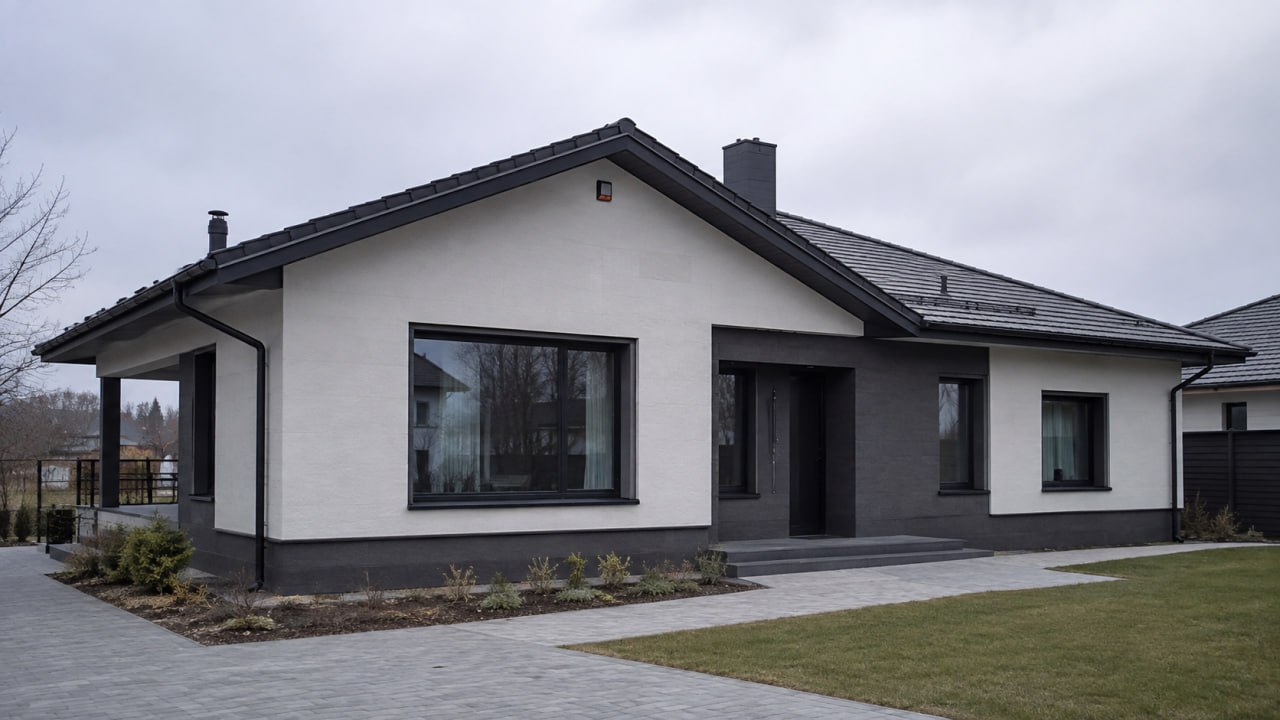
A facade works under load every day: in summer it heats up in the sun, in winter it goes through frost and temperature swings, and in spring and autumn it meets moisture, wind and rain. That is why choosing a facade system is not only about colour and texture, but about the whole build-up: the substrate, the insulation, the reinforcing layer, the adhesive, the detailing and the final finish.
A properly chosen facade should be attractive, warm and resistant to real-life service — without cracks, streaks and constant repairs.
Why climate affects a facade
A facade is under constant pressure from the outdoor environment:
- in summer the surface heats up strongly in the sun;
- in winter the material goes through freeze and thaw cycles;
- after rain and snow the lower zones take on a lot of moisture;
- sunlit walls carry a higher ultraviolet load;
- exposed sections are hit harder by wind;
- near the plinth there is constant splashing, dirt and meltwater.
If the system is chosen at random, dirt, streaks, cracks, delamination and a loss of neat appearance can appear over time.
Insulation thickness: why you cannot judge it by eye
Insulation thickness does not depend on a wish to "make it thicker", but on the specific house. It is important to account for:
- the wall material;
- the thickness of the existing wall;
- the age and condition of the building;
- the type of insulation;
- the heat losses of the house;
- the position of the house on the plot;
- the goal of the project: simply refreshing the facade, or genuinely reducing heating costs.
One house may need a single solution, while another will require a more substantial system. That is why insulation thickness is best chosen after an inspection or a calculation, rather than copied from the neighbours.
What matters when choosing a facade system
A good facade system has to meet several requirements at once:
- retain heat in winter;
- reduce wall overheating in summer;
- withstand humidity and frost;
- cope with temperature swings;
- protect the plinth and the lower zones;
- keep its appearance under the sun;
- be practical to maintain.
A facade is not only a decorative shell. It is the protection of the house against the outdoor environment.
Why the final finish has to be durable
The final layer takes on sun, rain, snow, dust and mechanical loads. It therefore has to:
- not crack;
- not fade;
- withstand moisture;
- keep its texture;
- clean easily;
- suit walls, the plinth, the entrance group and corners.
For tasks like these, KORDEKO flexible tile (PletaFlex) is a good fit: it is used as a decorative and protective finish for facades, plinths, columns, reveals, corners, entrance groups and architectural elements. How such a finish looks on real houses can be seen in the gallery of completed projects.
Insulation and finish must work as a single system
It is a mistake to choose the insulation separately, the adhesive separately and the finish separately, and then try to bring it all together on site. A facade has to be planned as a system. The general principles of external thermal insulation systems are described by the European Association for ETICS.
When facade insulation is carried out, it is important to establish in advance:
- the insulation thickness;
- the type of substrate;
- the reinforcing layer;
- corner reinforcement;
- the treatment of reveals;
- junctions with windows, roof and plinth;
- water drainage;
- the final finish.
When all the elements work together, the facade turns out stable, neat and long-lasting. A great deal here also depends on careful flexible tile installation.
Where mistakes show up fastest
Some zones are the first to reveal a poorly chosen system:
- the plinth;
- the lower part of the facade;
- the corners of the house;
- window reveals;
- the areas under drip edges;
- the spots beneath downpipes;
- the entrance group;
- sunlit walls.
These are precisely the places that need particularly careful protection from water, cracks, dirt and mechanical loads.
How to match the finish to the climate and use
Before choosing a facade, it is worth answering a few questions:
- What are the walls built from?
- Are there old cracks or weak areas?
- Is insulation needed, or only a decorative finish?
- Where does the facade get wettest?
- Which walls heat up most in the sun?
- What plinth is needed in terms of colour and practicality?
- Where will the corners, reveals, drip edges and junctions be?
This approach helps you choose not just an attractive material, but a facade that will perform properly for many years.
Conclusion
A facade should be chosen with the climate, the condition of the house and the real loads in mind: sun, moisture, frost, wind and temperature swings. Insulation thickness depends on the specific walls, while the final finish has to be durable, practical and long-lasting.
A KORDEKO flexible facade helps combine insulation, protection and an attractive appearance — so the house looks neat not for one season, but for many years. If the full scope of work does not fit the budget at once, the facade can be split into stages.
Frequently asked questions
What insulation thickness does a facade need?
There is no universal thickness — it is selected for each specific house. The wall material and thickness, the age and condition of the building, the type of insulation, heat losses, the position of the house on the plot and the goal of the project are all taken into account. That is why the thickness is determined after an inspection or a calculation, not by following the neighbours.
Which facade zones suffer first?
A poorly chosen system shows up fastest on the plinth and the lower part of the facade, on the corners of the house, window reveals, the areas under drip edges and downpipes, the entrance group and sunlit walls. These places need particularly careful protection.
Can insulation and finish be chosen separately?
No — a facade should be planned as a single system. If the insulation, adhesive, reinforcing layer, detailing and final finish are chosen separately and only brought together on site, the risk of cracks, streaks and delamination increases.
Need advice on your facade?
- ·Get a free consultation for your project
- ·Find out which material suits your facade
- ·We'll answer all your questions and help you choose